

The Invisible PDA Child
Written by an Invisible PDA Adult

So, I started to write this thing as I normally do, gathering my reading and sources, building my reference list and structuring the readers ‘learning’ so that it scaffolds logically and I can be sure they can come away from this article having learned about this week’s subject through information and real life contexts.
Not today, Zurg,
Today I am going to just write. I am going to ignore all the statistics and references and I am going to tell you what it is really like to be a PDA child in a mainstream school, with no diagnostic support, in the bloody wilderness of the 90s.
Nobody knew that I was autistic, had PDA, ADHD, POTS, Joint Hypermobility Syndrome (possibly Ehlers Danlos which is being assessed at the moment), IBS, and was soon to come into my season of endometriosis. If we are being pernickety then I most likely have OCD too but at this point who’s counting?
This was ‘Keep Calm and Carry On’ Britain. A Britain of hot summers playing outside until the streetlights came on, of Pokémon cards and the Spice Girls. Of Tamagotchis, and being pretty sure your Furby was secretly alive. This was not a time of outstanding SEND care, support or understanding. In these Badlands you were on your own.
It is in these lands that you would find 8 year old me, like a meek light-footed baby deer, navigating the mainstream school system. This system (still) prioritises compliance over comfort, silence over voice and attendance over needs. This was the same system that said these things about me:
‘Natalie is a kind, shy and quiet member of our class who can always be trusted to do the right thing.’
And
‘Natalie would reach her potential sooner if she would put up her hand more and pay attention.’
That’s it. That’s all they’ve got.
I was never in trouble. I attended, I was compliant, I was silent, I had no needs. I was a ‘pleasure to teach’ and I had ‘friends’.
Now what you’re expecting me to write here is that I then landed in my house after school like a nuclear warhead, and that my parents could barely contain my behaviour? Nope, sorry. I was pretty much the same. I played with my little brother, I ate my dinner, had my baths and went to bed. I was a ‘good girl’.
This is not to say that this is the norm. It also doesn’t mean that I was okay or coping. Far from it. It is far more common for children to display what is often referred to as restraint collapse once they arrive in their safe space with their safe adults. After a full day of holding it all together they unload their burden with the people they feel safest with… Where they can be authentically themselves. It is abhorrent to me that children should have to go through this but this is the gig at the moment, and it certainly was in the 90s.
So where did it all go? Where was my restraint collapse?
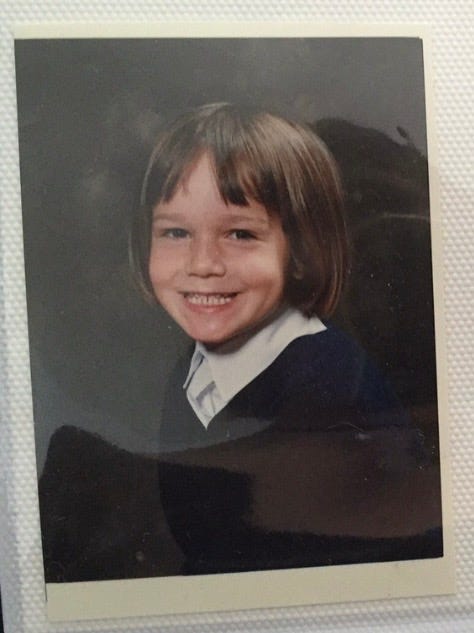
This is about to get incredibly personal so forgive me if I get a little weird and nervous, but here we go…
Bed wetting: Throughout primary school I would wet the bed at night. So much so that my mother trained me to use a little red basket under my bed (which contained spray, a cloth and new sheets) to clean my waterproof sheet and change the bedsheets in the night as she was so exhausted by it all. This was terrifying for me as I was certain there was something living under my bed and this process involved facing it. I was taken to a paediatrician who gave me a sticker chart which obviously is the most ridiculous thing to do in the world, as I wasn’t consciously wetting the bed, so this wasn’t a behavioural ‘choice’.
Skill regressions: At the age of six I started drinking from a bottle again and twiddling my hair to fall asleep. I was seeking sensory soothing at a difficult transitional time for me.
Controlling my environment and play: I would close my bedroom door and play with my animal figures in specific ways, setting out family groups, building homes and organising them accordingly. I didn’t want anyone to touch or move them. I needed to feel in control of something. I didn’t want anyone to see me play in case I was doing it ‘wrong’. I would also line up pennies or sweets and catagorise and organise them as a way of staying calm. I also taught myself how to play piano by ear.
Self-limiting food: I self-restricted to only my safe foods in the only place I could do that - at home. My safe foods weren’t available at school so this was the only place I could eat enough that I could feel full and no one would serve me food that caused me to gag. Often at school I couldn’t access parts or the whole of my meal which meant I was hungry, which made concentration harder.
Perfectionism: My work was often unfinished at school because I was so particular about it being perfect. I didn’t want to be seen making a mistake or presenting work to an adult that was messy so I would spend a long time ensuring perfection. Many of my break times at school were spent finishing my work, so I got even less time to decompress.
Night terrors: I would frequently have nightmares that played out like horror movies. Sometimes the same one would repeat. I would draw them when I woke up to show my mother, who became so concerned at one time she spoke with our Priest.
Skin, lip and scalp picking: This was a way I could release tension and stress in a socially acceptable and unnoticeable way. I would rip my lips until they bled, I sometimes still do.
Private stimming: Both at school and at home I would go to the bathrooms when I felt the need to stim. I knew that people would say negative things if they saw me so I had no choice but to go and hide when I needed to shake my hands.
Spending time with animals: When I got home I knew that to keep my big feelings under wraps it helped me to be near animals. I had dogs, gerbils, and fish and our garden backed onto a horse field where I would go out and play. I stroked and fed the horses. I sat and watched the fish. It was easier than playing with other children.
Writing and drawing: I have had a diary for as long as I can remember. I would write and draw my feelings in there as a way of cataloging and recording them. I felt like once it was written down it was real and I could let the feelings go.
It’s pretty easy to see that from the outside, many of these things could individually be typical behaviour in childhood, particularly in girls. But when compounded into one child, it’s a lot to be silently dealing with when you are only 8 years old.
Perspective helps us to understand that to an adult these may not seem like big things, but I am here to tell you that as a child some of these things were earth shattering to me. They weren’t big things, they were my whole thing. I carried tremendous guilt, shame and embarrassment about this list. I felt as though I was living two lives - not in the cool ‘Neo from the Matrix’ kind of way… in a way that caused me to experience heart palpitations, sweating hands, and panic attacks. In a way that sometimes made me vomit with anxiety.
I was part of a society that praised ‘good’ children, that were quiet, compliant, didn’t argue, and did as they were told by adults - regardless of whether they wanted to. This message was deeply internalised due to my autism and how my neurology interprets rules, expectations and social norms. It was these same rules that would lead me to greater harm as I got older.

Teenage Dirtbags
This is where the proverbial s*** hit the fan. It is well known that internalised profiles are linked to poorer mental health outcomes than externalised profiles, and I would like to offer myself as a case study.
Trigger warning - SA, Depression, Suicidal Ideation
You’re still here? Great, lets go down the rabbit hole…
Now before I say anything here let me say this. Having PDA does not make you a bad person, an offender or naturally mentally ill. However, if you are swimming in risk factors like school exclusion, trauma, chronic stress, unmet neurodevelopmental needs, exploitation vulnerability, and repeated negative interactions with authority, it absolutely can increase vulnerability to harmful outcomes.
Let me start where it begins - consent.
This is a real noodle soup for people like me because we are sitting on two sides of a really weird tennis match being played by two very different teams. The first team represents the systems I spoke about before who link your value as a person to how compliant, quiet, non-argumentative, well behaved and willing to disregard your own needs/preferences and conform you are. The other team is fairly new to the game and represents messages of consent, intrinsically held value, justice, strength in your voice, and your human rights. Both of these teams are apparently on your team and they both want what’s best for you. No one tells you when you are supposed to be on which side, you are meant to magically know via something EVEN more confusing to autistic people - context. Oh, and if you get it wrong the impact on your life could be catastrophic.
Case in point:
A teacher at lunch when I was 15: ‘Eat your vegetables! I promise you’ll like them eventually. Jodie eats hers and look how happy she is?! You really need to do as you’re told, I know what’s best for you.’
An abusive 19 year old ex-boyfriend when I was 15: ‘Just try it one time! I promise you’ll like it eventually. Jenny does it and look how happy she is?! You really need to do as you’re told, I know what’s best for you.’
Same message. Same day. Same neurology. Different context.
I can tell you with horrific certainty that my ability to work out what to do in these situations was underdeveloped, I could not differentiate when a rule applied and when it didn’t apply. I understood that I needed to do what grown-ups said, regardless of my feelings on the matter. This led me, during my teenage years, to great and prolonged harm.
Throughout my teenage years I was prone to disappearing for days at a time to stay with this boyfriend, because he told me to. To stealing and police involvement, because he told me to. To silence, because he told me to. I didn’t argue, I didn’t resist. I did as I was told. This eventually ended with me in the hospital. I was more vulnerable to this kind of exploitation, I believe, because of my neurology.
This is not to say - AT ALL - that being autistic or having PDA of any presentation automatically means that you are destined for harm or danger. This is only how my story went. My story only went like this because no one (not even I) understood my needs. I wasn’t properly supported in a PDA-aware way. My parents didn’t have access to information on this at the time, no one really did. It’s not anyone’s fault. My parents were wonderful, loving people who would peel the skin from their backs to keep you warm. But this just shows the importance and impact of good information, appropriate strategies and proper and timely implementation.
All Grown Up
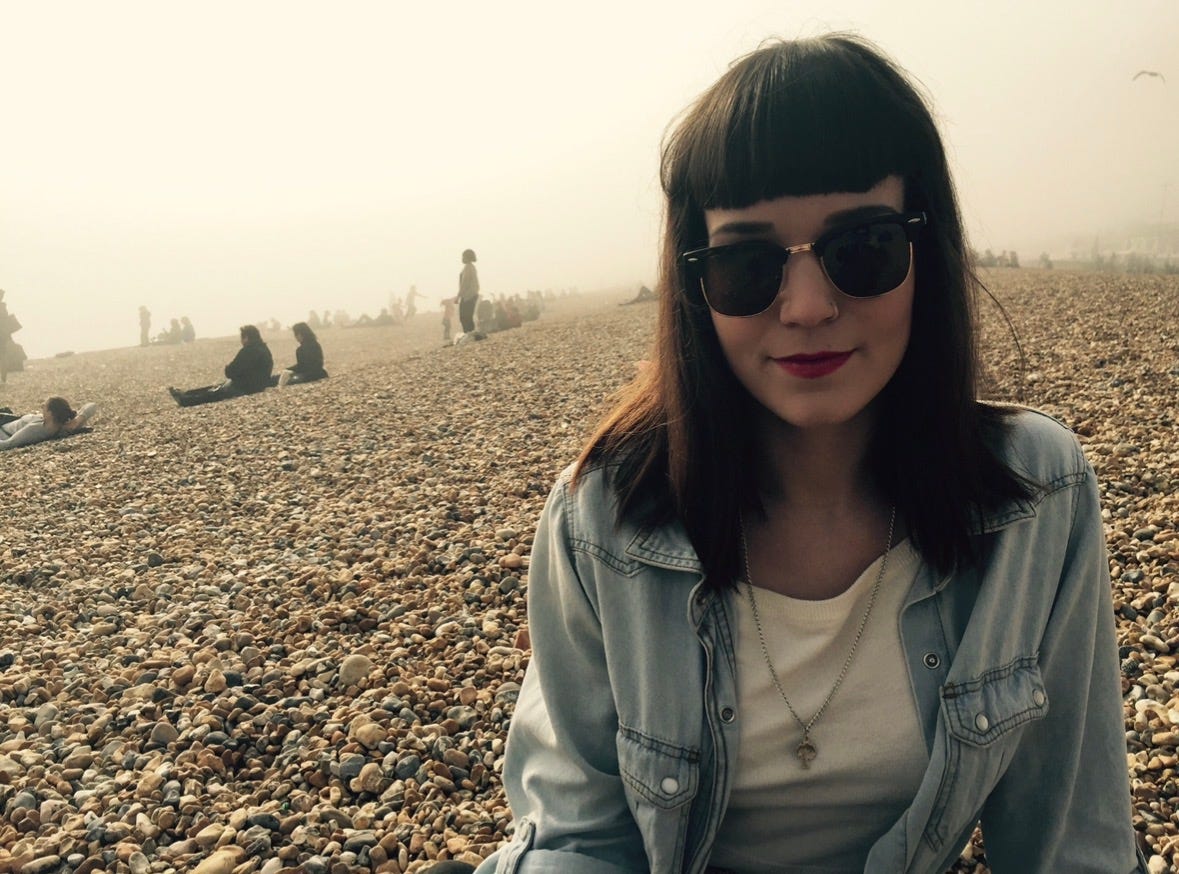
I’m in my early 20s, I’m apparently a grown up and I haven’t got a clue what’s going on. I am living in a flat with my boyfriend at the time and our insufferable cat. I am doing a degree (and finding it harder than expected - thanks ADHD and PDA demand avoidance) and I’m a teaching assistant in a primary school part time.
I start going to therapy because something’s not quite right and I can’t work out what. Nothing makes sense. People act in ways I don’t understand. I find things difficult that others find so easy. What is happening to me? My therapist asks me a question which has lived rent free in my head since… ‘What’s the least likely thing to happen right now? What are you not worried about?’ My answer? ‘My boyfriend leaving me. At least I know that won’t ever happen’. 10 points and a Woolworths voucher to whoever can guess what happened next?
Yep. I am a literal person and when this person told me ONE TIME that they’ll never leave me it turns out I’ll actually believe them. I couldn’t differentiate between a loving expression and an actual verbal contract.
I got home from work to find him sitting on his chair in the lounge, bag packed next to him, with no warning and surrounded by teary tissues. He explained that he was leaving… like, right now. Being the internalising wall-flower that I am, you would have expected me to nod with approval and get the door for him. You’ll be disappointed to hear that I went into a full autistic meltdown which was followed by an extended burnout. My safe person had left and I wasn’t emotionally stable enough to cope independently. Suddenly the responsibility of the flat, the finances and the bloody cat was mine, and mine alone. I started to lose my capacity to eat and drink, which set off my POTS (which I didn’t know I had), which made me collapse in the shower. Due to this I couldn’t go to work. Due to that I couldn’t afford food. Due to that I had kindly people from local church groups turn up with their kindly concerned eyes and bags of food shopping for me as a ‘donation’.
I turn up to counselling. “Guess what happened?” I whisper.
I had 16 weeks of counselling and was diagnosed with severe depression, anxiety and suicidal ideation. I was given a prescription for antidepressants and sent on my way. As I walked out the building I decided to stop in the bathroom to tidy myself up. While stood at the mirror, with the bathroom door ajar, I overheard my counsellor speaking with her manager and her words broke me in half. Looking down into her empty cup, she muttered “I just don’t think Natalie is going to make it…”
What did they miss?
I wasn’t depressed, I was in autistic burnout and my safe person and chosen external nervous system was gone without warning. I wasn’t simply anxious, I had PDA and my nervous system was shot. I wasn’t having suicidal thoughts I was having intrusive thoughts linked to OCD.
Even professionals get it wrong. This kind of misdiagnosis is common amongst people (especially women) who internalise their struggles with things like autism, PDA and OCD. It meant that I still didn’t have a clear picture of what was going on inside me, or who I was, or why. This meant that I didn’t know what type of help I needed. That kind of left me floating in space, and the next 9 years were spent looking for somewhere to land.
I did three degrees. I worked in interesting, varied and life changing jobs. I read, learned, did courses and furthered my education. I was sure that I would understand myself if I just learned to understand humans. In every job I worked in I stimmed privately in the bathrooms. I questioned management because I don’t see hierarchy in the same way as neurotypical people and if the Head Teacher is wrong then I’m going to bloody tell them that. It meant that I didn’t seem to make lasting friendships anywhere I went.
So, what happened in the end?
I am a walking example of how, even if you haven’t had the best start as an internalising PDAer, you can make it out the other end of the hardship and find the life you always dreamed of.
I am now married to my best friend in the entire world. He has ADHD and anxiety and is a total babe. Together we have learned as much about each other’s needs as possible. We are the best team and we have each other’s backs. We have four neurodiverse children with needs that include Autism, PDA, ADHD, Global Developmental Delay, Gestalt Language Processing and Speech Delay. It was having these four hurricanes that made us realise that we were neurodiverse and it started our journey of understanding and finally finding somewhere to land.
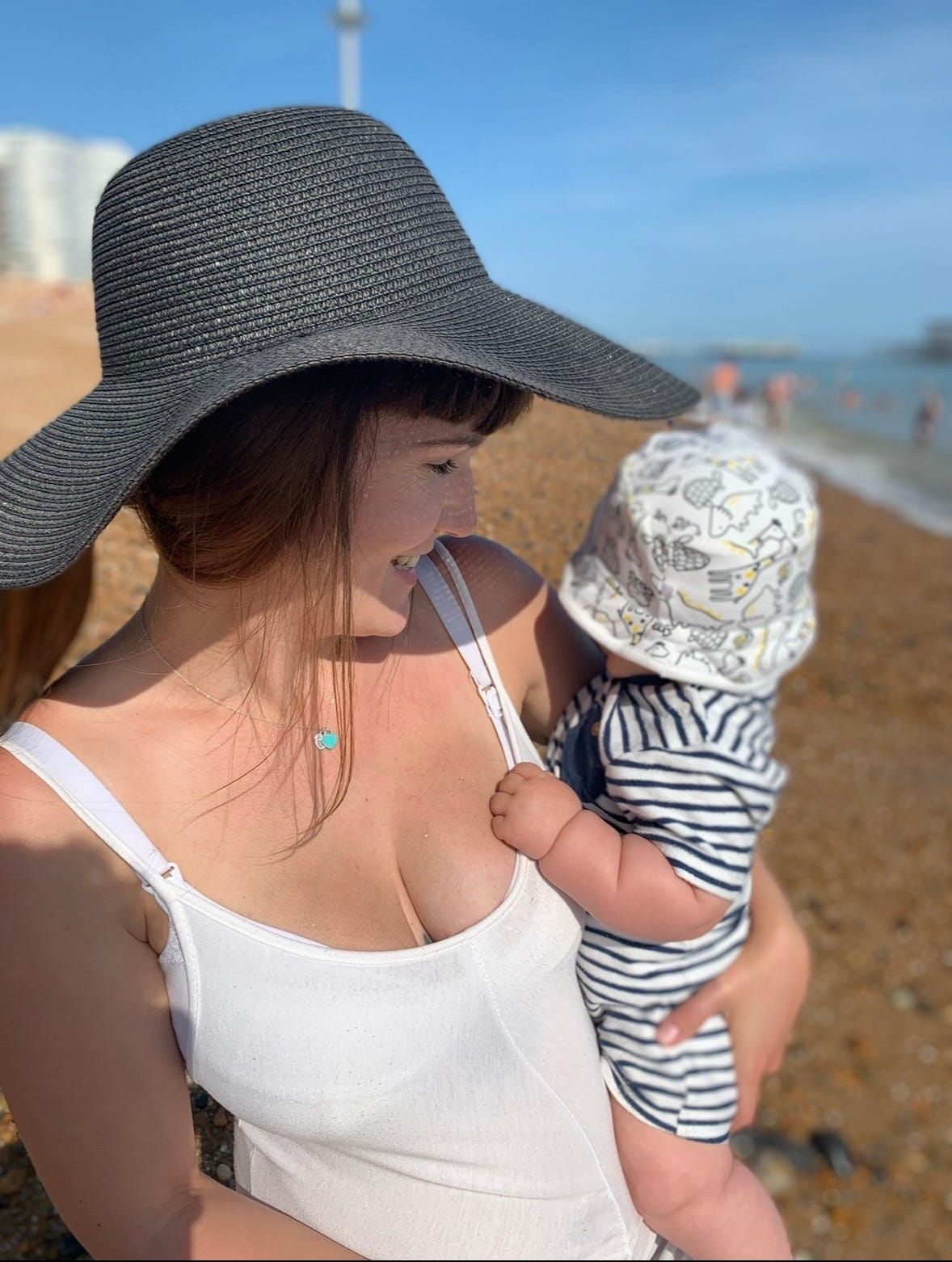
We home educate our children to keep them out of these systems and to give them the support they need right from day one. We have just bought a beautiful house with a garden where we plan to grow fruit and vegetables and have chickens. I have just signed with a Literary Agent and am in talks with a wonderful Publisher about a book deal on a book about PDA that lights me up.
I am living my actual dream… I’m a writer. Not just in my diary.
So, yeah. The moral of the story is, don’t give up on us internalisers, folks. We are built of strong stuff, we just need you to understand us and allow us access to the support we need.
Thanks for sitting through this, if you’re still here.
With Love,
SENDinMama
More from SENDinMama:
1:1 Support Services: Personalised support services for PDA families
Resources Hub: Printable, PDA, ADHD and SEND friendly tools and Book Lists for Home Education & School
Articles:
Thank you so much for this brilliantly written, honest account. I recognized my daughter in almost every one of your words. The world needs more of this, and needs your book. I am a happy follower of yours and look forward to everything you share.
This is such a beautiful piece. I can't imagine it was easy to write, so thank you for sharing it. And how wonderful to see how life is working out for you now ❤️